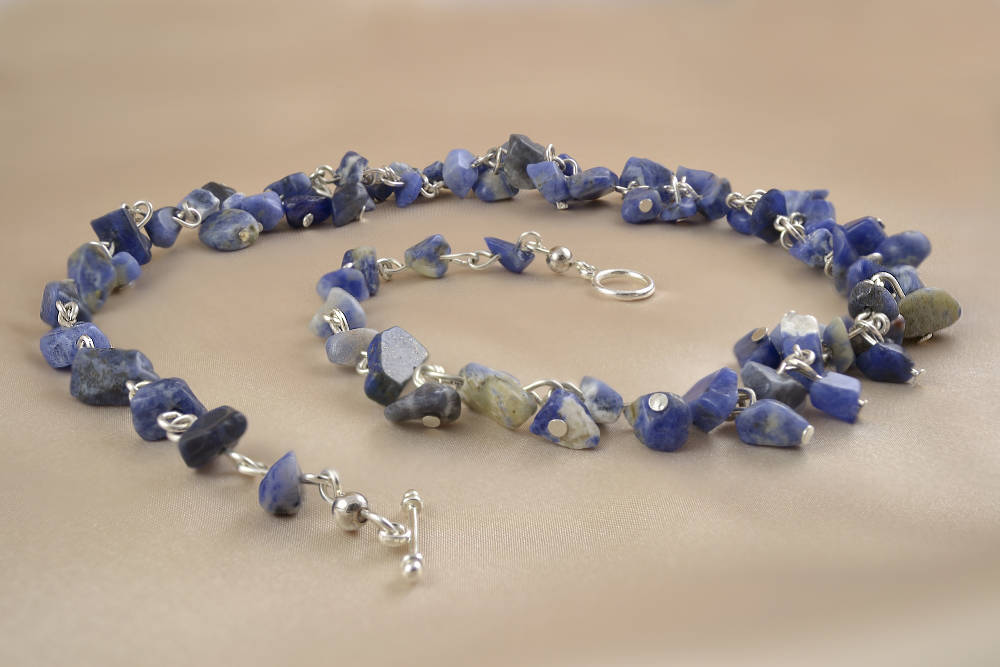
I planned to write you some facts about lapis lazuli and what was it like to work with it. As I read in books about its qualities, I realized that I had been sold sodalite instead of lapis lazuli. Those two are related but sodalite has white strands in it whereas lapis lazuli is clearly blue, only small dots of white or yellow in it. The white strands are calcite and sodium – that’s why the name sodalite. The big difference between the cousins here is the price: lapis lazuli is much more expensive than sodalite. The bluer the stone, the higher the price. The finest lapis lazuli comes from Afghanistan. The situation in the country makes the price even higher. The country is a battlefield. Very small amount of stone is mined in those conditions.
I was tricked, but I believe so was the seller. I have been a customer in the webshop for years and the lady has always tried to be fair and honest. This time it didn’t bother me so much to have “wrong” stone, because it looked exactly like in the picture. I got what I wanted, but only later I found out it had been sold to me under false name. It feels a bit same as when you find a bargain of brand product and later you find out you got a good-looking fake.
Handle with care
So, how was it to work with sodalite? It was a bit tricky to handle, because it seems quite fragile. It was almost as if you were handling glass beads. Some pieces fell apart, some gave in a little. I could use only the pieces where the hole was in the middle, I didn’t want to risk bits breaking away from a finished necklace. A third of the stash was just waste. The stone itself is beautiful; you just need to work gently with it. When you do, you’ll get a nice jewelry out of it, just like I did.