

Every continent has its own style and favorite materials when it comes to jewelry. European style is dignified, dark and light colors are popular. Mankind has always worn some decoration. Wearing jewelry has been a sign of position and prosperity. The higher the position, the more jewels. Then it’s no surprise that old portraits show ladies and lords practically covered by gold and jewels. Hats, hair and clothes are all filled with jewels. During renaissance the use of jewelry was more excessive than any other period in history, and royal families were real heavy-users of jewelry.
Venice, the glass capital of the world
What Europe has always been good at is making glass, and glass beads. Crystal was invented in ancient Rome and Venice continued the tradition. In 15th century Venetian glass was known all over the world. Now Czech glass makers represent the high standards of glass making in Europe. Glass is easy to dye and shape, so it’s a perfect bead material. Glass beads have had the part in changing the world; outside Europe they were new and unheard of. A well-known legend says that Europeans bought an island from coast of America with glass beads. The island was called Manhattan. Too bad the story is only a story.
Venetian glass industry may have originated from Roman one, but Venice thrived on its own. Venice dominated world’s glass bead trade. Especially island of Murano on the coast of Venice is even today famous for its glass products. Beading people know Murano beads. Other well-known Italian beads are millefiori (‘thousand flowers’), mosaic beads and chevron beads that are also known as trade beads since they were a popular trade item. They were exported especially to Africa, where they became status symbols among tribe chiefs. Lampwork beads and pendants represent the finest glass manufacture know-how. Each lampwork bead is hand-made.
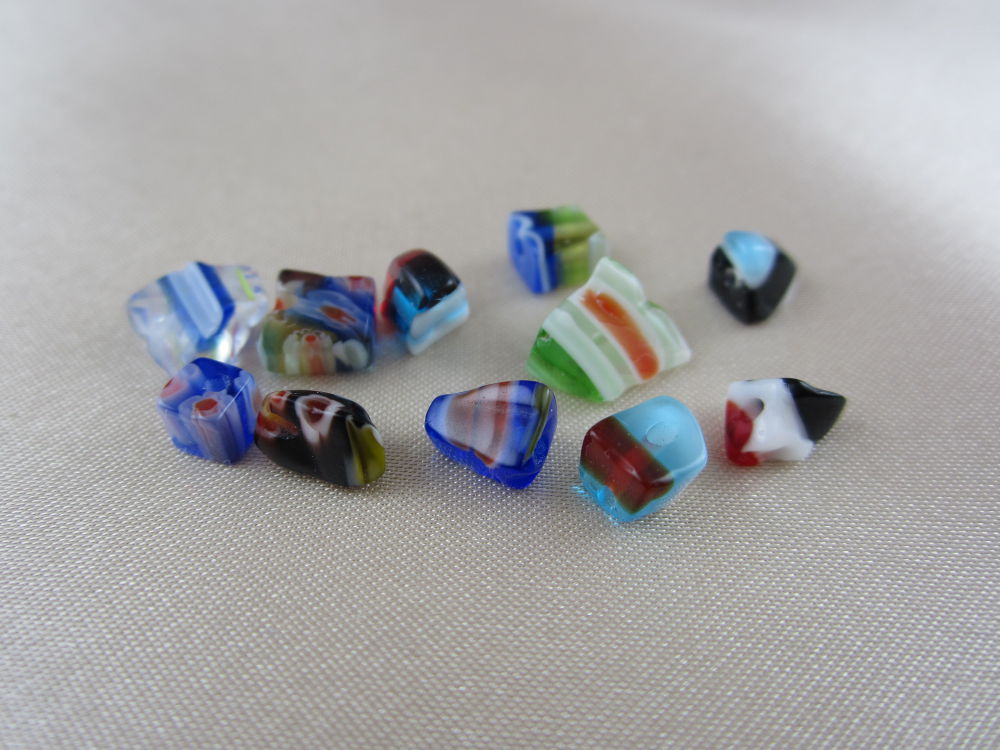
Millefiori beads
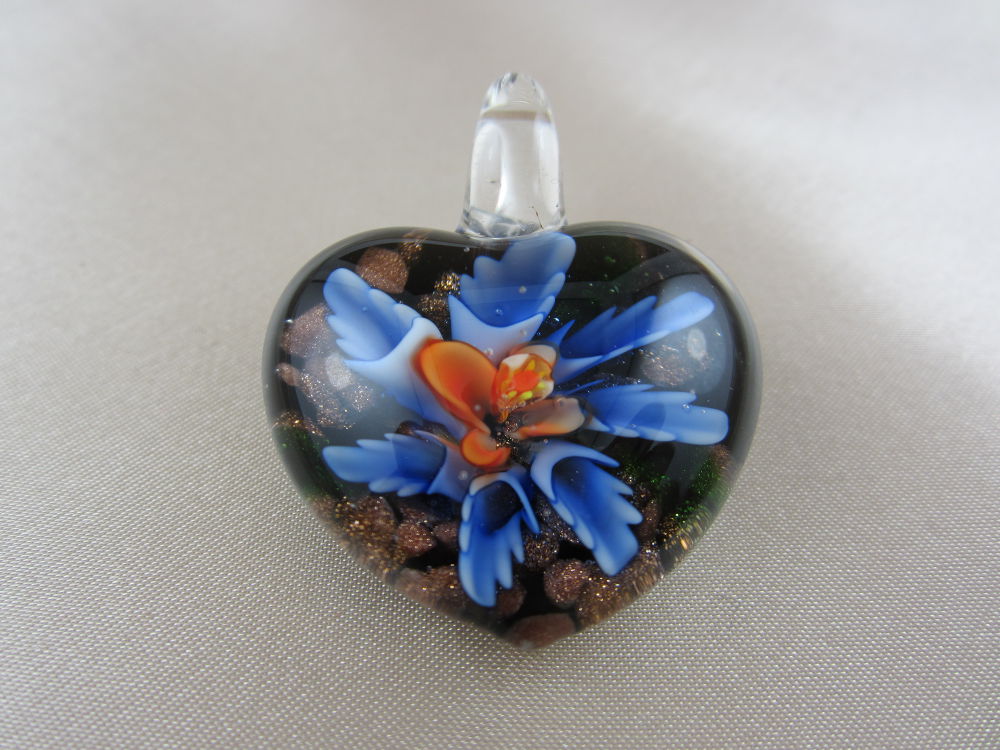
Lampwork flower pendant
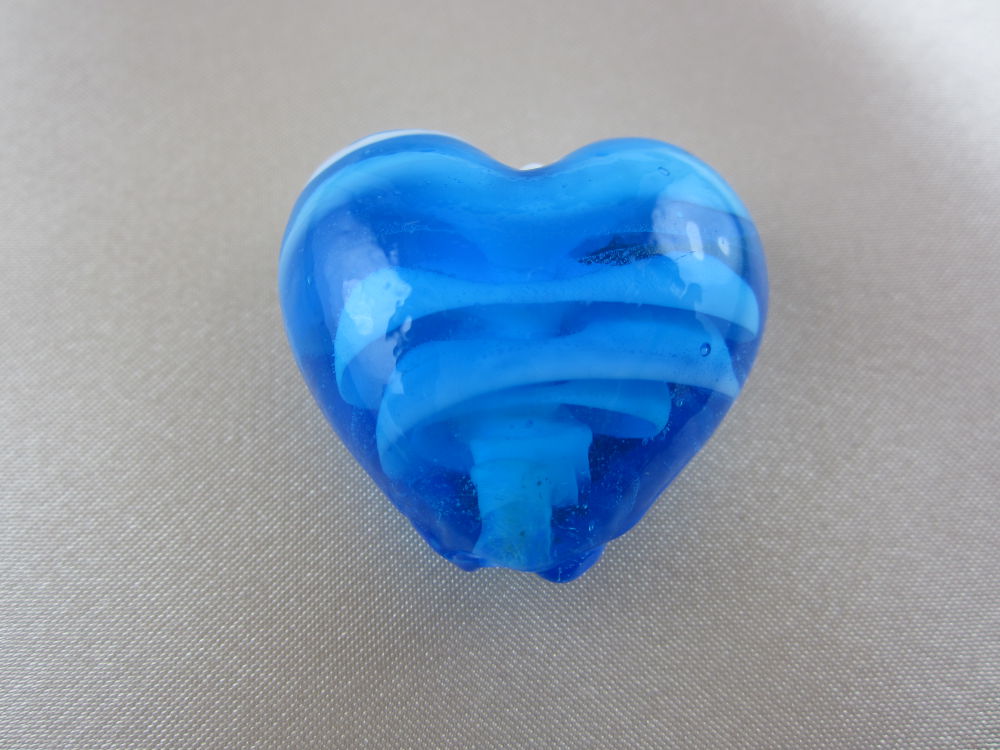
Blue lampwork pendant
The rest of us
There is more to Europe than just Venetian glass. A small town of Whitby in Britain got its moment in history, thanks to Queen Victoria. She had made a mourning jewelry to honor her late husband Albert, and Whitby provided the perfect material: jet. In addition to Albert, some other national heroes also were honored with mourning jewelry from Victoria. Naturally her subjects wanted to imitate the royal court and that was enough to make it the craze of the era. Whitby produced all the jet it could but that was not enough to supply the huge demand. Jet imitations of poorer quality were imported from France, they were called “French glass”. Cheap copies were not just a French thing, Brits learned to cover wooden beads with enamel to create jet-like beads.
Beads are part of most religions. Main religion of ancient Europe was Catholicism, it had even greater influence than today. Bead are used in rosaries. An interesting fact is that words ‘bead’ and ‘prayer’ used to be same word in ancient English. That makes sense: in a rosary a bead is a prayer. No wonder they derive from the same word.
As a Finn, I’m interested in Finnish jewelry history. It is tied to continental one, the trends came here a bit later and style was more modest than in Europe. The main reason for this was that Finland didn’t really have rich ruling class and that caused lack of customers. Only brief exception was Prince John III of Sweden and his wife Catherine Jagiellon, a Polish princess. They lived in Turku for a moment before becoming the king and queen of Sweden.
Literature:
Janet Coles & Robert Budwig: The Complete Book of Beads
J. Anderson Black: A History of Jewels
Raimo Fagerström: Suomalaisia antiikkikoruja (Finnish Antique Jewellery)
